 how-to
How to Wash Graphic Tees Properly: 7 Steps That Work
Table of Contents
- Why Graphic Tees Need Special Care
- Step 1: Read the Care Label and Sort Your Load
- Step 2: Turn the Tee Inside Out and Use a Mesh Bag
- Step 3: Choose Cold Water and a Gentle Cycle
- Step 4: Use a Mild Detergent (Skip the Bleach)
- How to Wash Graphic Tees Without Fading
- The Best Way to Dry Graphic Tees
- How to Remove Stains from Graphic Tees
- Frequently Asked Questions
Last Updated: October 19, 2026
Why Graphic Tees Need Special Care
A graphic tee is a cotton T-shirt with a printed design bonded to the fabric surface. That print is the fragile part.
That is the whole reason this guide exists. At Tanlajo Boutique, our pieces are 100% combed ring spun cotton with printed graphics, so we care a great deal about what happens in the laundry room.
Here is what actually damages a print:
- Heat softens the ink and makes it crack when the fabric flexes
- Friction from other garments rubs the design thin
- Harsh detergent slowly eats at the print's bond
- The spin cycle twists and stretches the fabric under the design
The good news: none of this is hard to prevent. Seven steps, one load of laundry, and your graphics stay intact.
Step 1: Read the Care Label and Sort Your Load
The care label is the first thing to check, and most people skip it. It tells you the maximum water temperature, whether tumble drying is allowed, and whether the print needs special handling.
When the label conflicts with general advice, follow the label. A heat-transfer print that says "cool iron only" outranks any rule of thumb.
Sorting matters just as much:
- Separate by color. New dark tees bleed dye onto light ones.
- Keep prints away from zippers, hooks, and rough denim. These abrade the design.
- Wash graphic tees with soft items. Cotton tees, underwear, and soft pajamas are fine load mates.
- Turn everything graphic inside out before it goes in the pile, not after.
Step 2: Turn the Tee Inside Out and Use a Mesh Bag
Turning a graphic tee inside out is the single highest-value habit in this whole process. It puts the printed side against itself instead of against the drum and other garments. Friction drops, and so does abrasion.
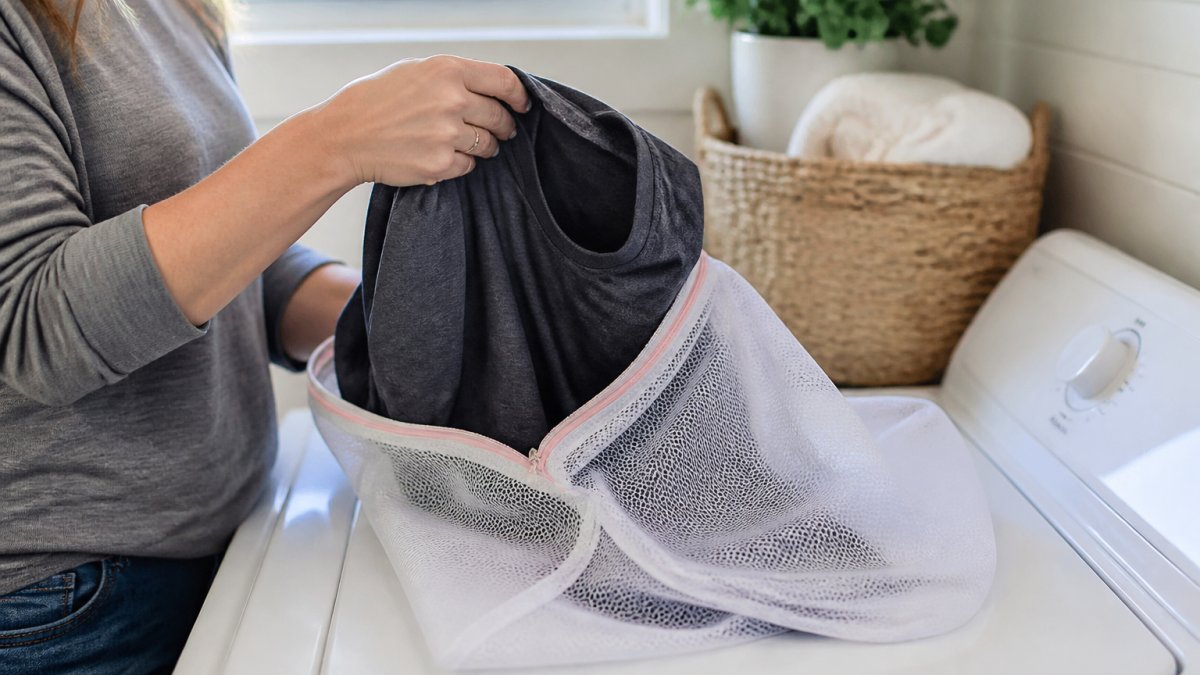
Then go one step further and use a mesh laundry bag. A mesh bag keeps the tee from stretching in the spin cycle and stops it from wrapping around heavier items.
A few practical details:
- Use a bag sized for one or two tees, not a stuffed pillowcase
- Close the zipper on the bag before washing
- Never put a bagged tee in with shoes or towels
Step 3: Choose Cold Water and a Gentle Cycle
Cold water protects the print. Heat is what makes ink crack and colors fade, and cold water removes normal soil just fine for everyday wear.
Set the machine to:
- Water temperature: cold or cool
- Cycle: gentle or delicate
- Spin speed: low
- Extra rinse: optional, but helpful if anyone in the house has sensitive skin
Skip the heavy-duty cycle and the high-spin setting. High spin wrings the fabric hard, and that stress shows up first at the edges of the design.
If your machine has a "hand wash" setting, use it for older or vintage tees where the print already looks tired.
Step 4: Use a Mild Detergent (Skip the Bleach)
Mild detergent is the right choice for printed apparel. Strong detergents and bleach attack the ink, and chlorine bleach will strip color from a design permanently.
What to use:
- A gentle, dye-free liquid detergent
- A small amount, not a full cap
- No fabric softener on the printed side
- No chlorine bleach, ever
Color-safe bleach and oxygen bleach are different from chlorine bleach. They are gentler, but we still recommend testing on an inside seam before using either on a graphic tee.
For a screen-printed shirt, keep detergent off the print where you can. Pour it into the dispenser or the water, not directly onto the design.
How to Wash Graphic Tees Without Fading
Fading comes from three things: heat, sunlight, and harsh chemistry. Control those and the design holds its color far longer.
Our rules for keeping prints bright:
- Wash in cold water every time
- Turn inside out to reduce surface wear
- Air-dry instead of tumble drying
- Store folded, away from direct sunlight
- Wash less often; spot clean between wears
A common mistake is washing a graphic tee after every single wear. Cotton graphics do not need that. Air the tee out overnight and wear it again if it is still fresh.
The Best Way to Dry Graphic Tees
Air-drying is the best way to dry a graphic tee, but how you air-dry matters as much as whether you do. A heavy screen print on a wet cotton tee can pull the fabric out of shape if you hang it by the shoulders, and a heat-transfer print can lift at the edges if it dries against a hot surface. The goal is to dry the cotton without stressing the print or the shape of the shirt.
Flat-dry first, then hang
The safest sequence for a graphic tee is:
- Lay the tee flat, printed side up, on a clean white towel or a drying rack. Smooth out wrinkles with your hands rather than shaking the shirt.
- Reshape the collar and shoulders while the fabric is damp, because cotton holds whatever shape it dries in.
- Let it air-dry most of the way, usually 2 to 4 hours indoors at room temperature, depending on humidity.
- Hang it to finish once the print is dry to the touch, using a wide plastic or padded hanger rather than a thin wire one.
Flat-drying protects the print from the weight of the wet fabric and keeps the shoulders from developing hanger bumps. Hanging a soaking-wet graphic tee is the most common cause of stretched-out shoulders and a print that looks distorted after the first wash.
Why air-drying beats the dryer
- No heat means no cracking. The ink binder softens at dryer temperatures and cracks when the fabric flexes as it cools.
- No tumbling means no friction. The drum and other garments rub the print thin over time.
- Colors stay saturated longer. Heat and agitation both accelerate fading.
If you must use a dryer
Sometimes air-drying is not practical. If you use a dryer, follow these rules:
- Low heat only. High heat is the single fastest way to ruin a print.
- Remove the tee while still slightly damp. The residual moisture finishes on the line, and the print spends less time in heat.
- Never leave it in after the cycle ends. A tee sitting in a warm drum keeps cooking the ink.
- Skip dryer sheets on graphic tees. The coating can dull the print and reduce the fabric's ability to wick moisture.
Dry by print type
- Screen print: the most durable. Low-heat tumble drying is usually fine, though air-drying still extends the life of the print.
- Heat-transfer print: the most heat-sensitive. Air-dry whenever possible; if you tumble, use the lowest setting and pull the tee out early.
- Direct-to-garment print: air-dry printed side up. The ink sits in the fibers and can fade faster with repeated heat exposure.
Where and how to hang
Line-dry indoors or in shade. Direct sunlight fades prints faster than any washing machine will, and it also yellows white cotton over time.
Use a drying rack or a padded hanger, and avoid clothespins on the printed area, which can leave pinch marks in the ink. For heavy prints, a flat rack is better than a line because it supports the full width of the shirt.
A tee that is fully dry before it goes in the drawer stays fresh longer and needs washing less often, which is the simplest way to extend the life of any graphic.
How to Remove Stains from Graphic Tees
Most stain advice for graphic tees fails for one of two reasons: it treats every spill the same, or it treats the print like ordinary cotton. Neither works. A grease spot on a screen print and an ink mark on a direct-to-garment print need different approaches, and the wrong one can set the stain or lift the ink.
The universal rules come first, because they apply no matter what spilled:
- Work from the back of the fabric, not the printed face. Turn the tee inside out and treat the reverse side so you push the stain out rather than driving it deeper into the ink.
- Blot, never scrub. Scrubbing abrades the print and spreads the stain into a larger ring.
- Use cold water first. Hot water can set protein and dye stains permanently.
- Test any product on an inside seam and let it dry before you commit it to the visible print.
- Never let a treatment dry on the fabric. Dried detergent or cleaner leaves a ring that is harder to remove than the original spill.
Match the treatment to the spill
Grease, oil, salad dressing, butter. These are the most common graphic-tee killers because oil bonds to the ink binder.
Food, coffee, wine, juice. Blot up as much as possible, then flush the back of the stain with cool water.
Sweat, deodorant, body oil. These show up as yellowing at the underarms and collar.
Mud and grass. Let mud dry completely, then brush off the solids before you wet the fabric.
Print-specific cautions
- Screen print: the most forgiving. Most spot treatments are safe as long as you keep solvents off the printed face and avoid scrubbing.
- Heat-transfer print: the most fragile. Solvents and heat can lift the transfer film, so stick to cool water and mild detergent, and never iron over a treated spot.
- Direct-to-garment print: the ink sits in the fibers, so it absorbs liquids. Blot quickly, treat from the back, and avoid soaking the printed area for long periods.
Once the stain is lifted, wash the tee as you normally would: inside out, cold water, gentle cycle, mild detergent. Check the spot before you move the tee to the dryer or the line, because heat from drying will lock in anything you missed.
Frequently Asked Questions
Should you turn graphic tees inside out before washing?
Yes. Turning the tee inside out is the single most effective way to protect the print from friction against other garments and the drum. It keeps the graphic from rubbing directly against zippers, buttons, and heavy fabrics, which is what causes cracking and peeling over time. Pair it with a mesh laundry bag for extra protection, especially for older or vintage tees with delicate prints.
What water temperature is best for washing graphic tees?
Cold water is best for washing graphic tees. Heat breaks down the bond between the ink and the fabric, which leads to fading and cracking. Cold water also reduces shrinkage and color transfer onto other items in the load. If a care label says warm, keep it on the lowest warm setting and only for heavily soiled tees without delicate prints.
Can you put graphic tees in the dryer?
You can, but air-drying is safer. High heat is the main cause of cracked and peeling graphics. If you must use a dryer, choose the lowest heat setting and remove the tee while it is still slightly damp, then hang it to finish drying. The best way to dry graphic tees is to line-dry them in the shade, away from direct sunlight, to prevent fading.
How do you remove stains from a graphic tee without damaging the print?
Blot the stain immediately with a clean cloth, then apply a small amount of mild detergent or a stain remover made for delicates directly to the spot. Gently work it in with your fingers, let it sit for 10 to 15 minutes, and rinse with cold water. Avoid scrubbing the printed area, which can lift the ink. For tough stains like oil or grass, repeat the process before washing.
Caring for printed apparel takes a few small habits, not a special product. If you want tees built to survive that routine, our faith-filled designs use soft, durable combed ring spun cotton with tear-away labels and graphics made to hold their shape. Browse the collection at Tanlajo Boutique and add a piece that lasts past the first wash.