 comparison
Christian Apparel vs Fast Fashion Quality: Which Lasts?
Last Updated: November 2, 2026
Quick Summary
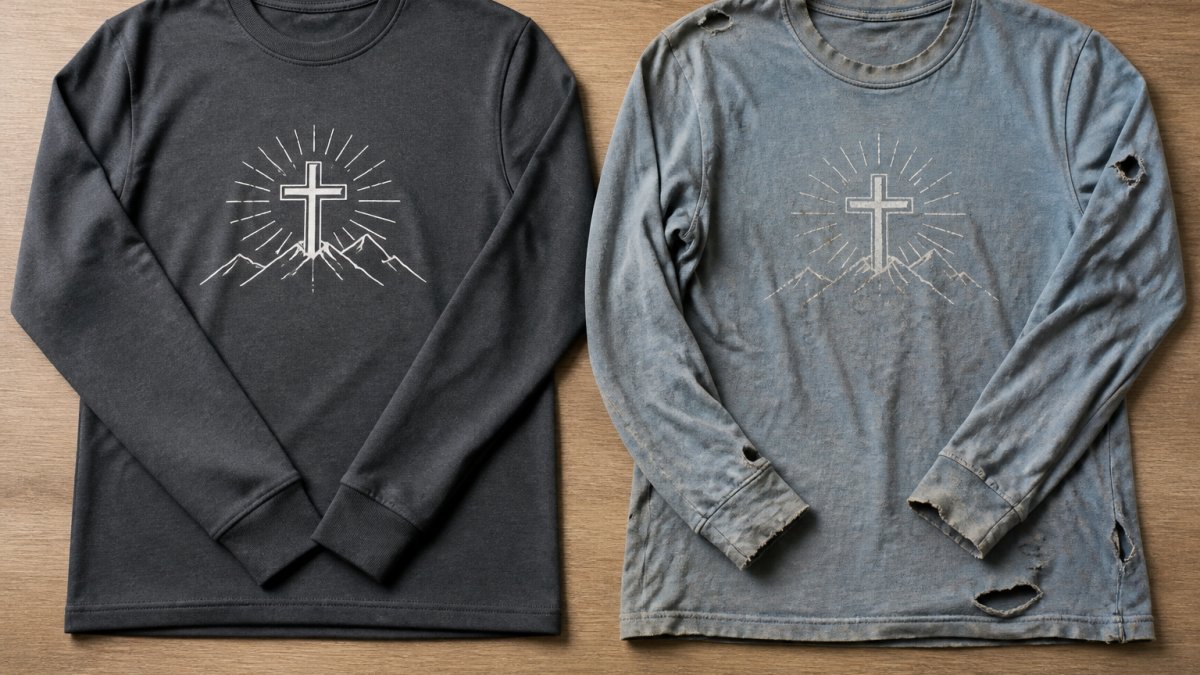
Christian apparel from a thoughtful small shop typically uses heavier combed cotton, reinforced seams, and durable screen printing, while fast fashion relies on thin fabric, loose stitching, and heat-pressed graphics that peel within a few washes. The label tells you little, so judge the garment itself by fabric weight, seams, and print method.
- Flip the shirt inside out and check fabric weight, seams, and print method before buying.
- Midweight combed ring spun cotton balances softness, opacity, and shape retention best for graphic tees.
- Wash graphic tees inside out in cold water and air dry or tumble on low to protect prints.
- Cost per wear is price divided by wears, so a longer-lasting tee can cost less over time.
- A faith-based label is not a quality or ethics guarantee, so ask for supply-chain disclosure and certifications.
Table of Contents
- Christian Apparel vs Fast Fashion Quality: The Core Differences
- How to Tell if a T-Shirt Is Good Quality Before You Buy
- The Best Fabric for Graphic Tees That Hold Their Shape
- Print Quality and Durability: Why Graphics Crack and Peel
- Cost Per Wear: Why Premium Faith-Based Clothing Can Cost Less Over Time
- How to Wash Graphic Tees Properly So Prints and Fabric Last
- How to Make Graphic Tees Last Longer Through Daily Care
- Choosing Faith-Filled Apparel That Fits Your Everyday Wardrobe
- Frequently Asked Questions
Christian Apparel vs Fast Fashion Quality: The Core Differences
Christian apparel and fast fashion part ways at the fabric.
Here is the honest version: not every Christian brand is high quality, and not every budget tee is disposable. The label tells you almost nothing.
McKinsey's State of Fashion outlook found that nearly half of fashion executives expected industry conditions to worsen, which pushes many labels toward cheaper construction, not better.
How to Tell if a T-Shirt Is Good Quality Before You Buy
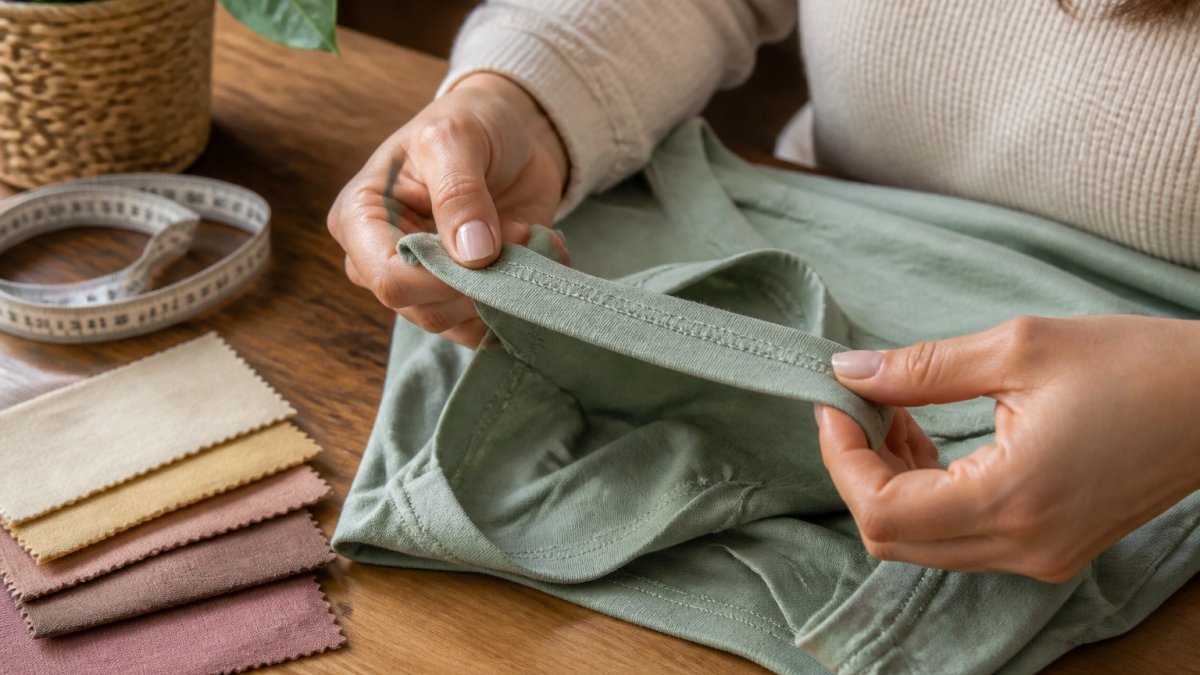
Good quality is visible in three places: fabric weight, seams, and print. Flip the shirt inside out and look before you commit.
Check Fabric Weight and Knit
Fabric weight, measured in ounces per square yard, tells you how substantial a tee will feel. Lightweight cotton tends to go see-through on light colors and stretch at the collar.
The knit matters as much as the weight. Combed ring spun cotton has longer, smoother fibers, meaning a softer hand feel, less pilling, and better colorfastness than standard open-end cotton.
Inspect Stitching, Seams, and Print Method
Turn the shirt inside out and check the side and shoulder seams. Quality garments use tight, even stitching with a clean finish and no loose threads.
Then look at the print. Screen printing sits in the fabric and flexes with it; heat-transfer vinyl sits on top and cracks along fold lines. For more durability signs, our guide on 7 signs your long sleeve faith shirts will actually last walks through what to check before you spend.
The Best Fabric for Graphic Tees That Hold Their Shape
The best fabric for graphic tees is a midweight combed ring spun cotton, because it balances softness, opacity, and shape retention. Blends with a little polyester resist shrinking, but high polyester content traps heat and pills faster.
Here is how the common options compare:
| Fabric | Weight Range | Shape Retention | Print Behavior | Best For |
|---|---|---|---|---|
| Combed ring spun cotton | 5-6.5 oz | Strong | Holds screen print well | Everyday graphic tees |
| Standard cotton | 4-5 oz | Moderate | Good, thinner hand | Budget basics |
| Cotton-poly blend | 4-5.5 oz | Strong, less shrink | Good, can pill | Low-maintenance wear |
| Tri-blend | 3.5-4.5 oz | Moderate | Soft drape, thinner | Fashion-forward fits |
| Low-cost open-end cotton | Under 4 oz | Weak | Prone to cracking | Disposable fashion |
Our tees are made from 100% combed ring spun cotton, chosen for a soft feel and durable wear.
Print Quality and Durability: Why Graphics Crack and Peel
Graphics can crack and peel when the print does not move well with the fabric. How a print is applied affects how it holds up over time.
Three factors decide how long a print lasts:
- Print method: screen print outlasts heat transfer by a wide margin
- Ink cure: under-cured ink washes out and fades early
- Wash routine: hot water and high heat break down the bond faster than cold water and air drying
Drying a graphic tee on high heat can damage the print over time.
Cost Per Wear: Why Premium Faith-Based Clothing Can Cost Less Over Time
Cost per wear is the price of a garment divided by the number of times you actually wear it. A cheap tee worn five times before the print cracks costs more per wear than a well-made tee worn fifty times. That math is the strongest argument for buying better and buying less.
Run the Numbers on Two Real Scenarios
| Factor | Budget Fast-Fashion Tee | Durable Faith-Based Tee |
|---|---|---|
| Purchase price | $12 | $32 |
| Expected wears before failure | 20 | 90 |
| Cost per wear | $0.60 | $0.36 |
| Replacements over 2 years | 4 | 1 |
| Total 2-year spend | $48 | $32 |
Those numbers are illustrative, not a guarantee, your wash routine and rotation change the outcome. But the direction is consistent: the cheaper garment usually loses once you divide by wears.
The Three Variables That Move Cost Per Wear
Purchase price is only one input. The other two are lifespan and replacement frequency, both shaped by construction and care.
- Lifespan: Sturdier fabric and well-finished construction can extend the number of wears before failure. A tee that pills, shrinks, or cracks its print after a season has a short lifespan no matter what it cost.
- Repairability: A loose seam can be restitched; a cracked heat-transfer graphic usually cannot be saved. Garments with sewn-in labels and standard construction are easier for a tailor to repair than heavily bonded or fused pieces.
- Replacement frequency: Fast fashion's low price encourages frequent replacement, which resets the cost-per-wear clock every time. Buying one durable tee instead of three cheap ones spreads the cost across more wears and fewer shopping trips.
How to Estimate Wears Before You Buy
You cannot know exact lifespan at the rack, but you can estimate. Check fabric weight, inspect seam finishing, and ask about the print method. Then apply a conservative wears estimate and divide.
This is why we tell customers to think in seasons, not shopping trips. If you are weighing whether the higher price is justified, our honest review on whether expensive Christian apparel is worth it breaks down the trade-offs without the sales pitch.
How to Wash Graphic Tees Properly So Prints and Fabric Last
Wash graphic tees inside out in cold water on a gentle cycle, then air dry or tumble on low. That single routine protects both the print and the cotton more than any detergent choice. Heat is the enemy on both fronts.
Follow these steps:
- Turn the tee inside out to shield the print from friction
- Use cold water
- Choose a gentle or normal cycle with a low spin
- Skip fabric softener, which coats fibers and dulls prints
- Air dry flat or hang, or tumble on the lowest heat setting
- Avoid ironing directly over the graphic
For the full walkthrough, our step-by-step guide on how to wash graphic tees properly covers pretreatment, detergent choice, and drying in detail.
How to Make Graphic Tees Last Longer Through Daily Care
Longevity comes down to small habits repeated over years. Rotate your tees so no single shirt takes all the wear. Store them folded rather than hung, since hangers stretch the shoulders. Wash less often than you think you need to; spot cleaning handles most daily marks.
A few habits that pay off:
- Wear an undershirt to reduce washing frequency
- Treat stains immediately with cold water before they set
- Keep tees out of a hot dryer
Shrinkage and pilling are usually care problems, not manufacturing defects. Cold water and low heat prevent most of both.
Choosing Faith-Filled Apparel That Fits Your Everyday Wardrobe
The right faith-based clothing should fit the life you actually live, not just Sunday morning. A durable tee works under a cardigan, with jeans, or layered for a youth group night. Faith expression and everyday style are not in conflict; the best pieces do both without shouting. But style and durability are only part of the decision. The label on the front does not tell you how the garment was made, who made it, or what it will cost the planet, so assess faith messaging and manufacturing quality separately.
Separate the Message from the Manufacturing
A Christian graphic does not guarantee ethical production or durable construction. Plenty of brands print scripture on thin, loosely stitched blanks sourced from the same low-cost supply chains as fast fashion. Conversely, a well-made tee with no faith message can be the more responsible purchase. Use two separate checklists:
- Faith and message: Does the design reflect your values? Is the tone consistent with modesty and humility? Does the brand explain its mission beyond a slogan?
- Manufacturing quality: Fabric weight and fiber, seam construction, print method, fit, and care requirements. These determine how long the garment lasts and how it feels.
A brand that is transparent about both, message and making, is easier to trust than one that leads with scripture and stays quiet about its supply chain.
Verify Sourcing and Labor Claims
Ethical claims are easy to print and hard to verify. Turn broad promises into specific questions:
- Ask for supply-chain disclosure. Does the brand name its fabric mills, cut-and-sew facilities, or at least the countries of production? Vague "ethically made" language without a location is a yellow flag.
- Look for recognized certifications. Third-party programs such as Fair Trade Certified, GOTS (Global Organic Textile Standard), and OEKO-TEX verify labor or chemical-safety claims. A certification is not proof of perfection, but it is independently checkable.
- Check for a published code of conduct. Brands that publish supplier standards and audit results give you something to evaluate; brands that do not are asking for trust without evidence.
- Ask what the brand can substantiate. If a claim cannot be backed by a certificate, an audit, or a named supplier, treat it as marketing rather than fact.
This is the practical version of ethical shopping: not a vague commitment to "buy better," but a short list of questions you can ask any brand, including faith-based ones.
Compare Environmental Impact with Real Measures
Sustainability claims are often general. Compare specific, checkable factors instead:
- Fiber choice: Organic cotton uses fewer synthetic pesticides than conventional cotton; recycled polyester diverts plastic waste but still sheds microfibers in the wash.
- Production and shipping: Locally or regionally made garments travel shorter distances, though fiber origin still matters. No garment is zero-impact.
- Washing: Heating water and machine drying typically dominate a tee's use-phase energy. Cold washing and air drying reduce that footprint more than switching detergents.
The honest comparison is not "Christian apparel good, fast fashion bad." It is a garment-by-garment look at fiber, distance, care, and lifespan, and the durable option usually wins because it is worn longer and replaced less often.
Build a Small, Verifiable Core Wardrobe
Start with a small core of well-made pieces you will genuinely rotate. If you want styling ideas, our guide on how to style faith-based apparel for everyday wear shows how to build outfits around a single graphic tee.
When you are ready to shop, browse our faith-filled tees and accessories on the Tanlajo Boutique website, made from 100% combed ring spun cotton with tear-away labels.
Frequently Asked Questions
Is Christian apparel better quality than fast fashion?
It depends on the brand, but Christian apparel often uses heavier fabrics and better construction. Many faith-based brands use heavier cotton knits, while fast fashion often uses lighter fabrics. Heavier cotton tends to resist see-through fabric and hold its shape through repeated wear. Check the fabric weight, stitching, and print method on any Christian apparel listing before assuming quality.
How can you tell if a graphic T-shirt is good quality?
Look at four things: fabric weight in ounces per square yard, the tightness of the cotton knit, the stitching at hems and shoulders, and the print method. A heavier shirt with dense stitching and a print that sits flush with the fabric will generally hold up better than a thin, loosely knit tee. Pull the fabric gently against light to check for see-through spots, and read care instructions to see whether the brand expects the print to survive normal washing.
What fabrics make graphic tees last longer?
Combed ring spun cotton is a strong fabric choice for graphic tees that need to last. Blends with a small amount of polyester can add stretch, but high polyester content tends to pill. Heavier cotton knits generally resist shrinkage better than lightweight fabrics.
How should you wash graphic tees to protect the design?
Turn the shirt inside out, wash in cold water on a gentle cycle, and skip fabric softener, which coats fibers and weakens prints. Use a mild detergent and avoid overloading the machine so the print is not rubbed against zippers or buttons. Tumble dry on low or hang dry, since high heat is the main cause of print cracking and shrinkage. Following these steps is the simplest way to make graphic tees last longer without special products.
Does a higher price mean clothing is better quality?
Not automatically, but price usually reflects fabric weight, construction time, and sourcing standards. A $10 fast fashion tee often uses low-cost cotton, thin knits, and heat-transfer prints that peel within a few washes. A higher-priced piece may use higher-quality materials and construction. Compare cost per wear rather than sticker price, since a garment that lasts longer often costs less per wear.
The gap between Christian apparel and fast fashion quality comes down to fabric, construction, and care, and it shows up in how long a garment stays wearable. We built Tanlajo Boutique around soft, durable combed ring spun cotton, tear-away labels, and seasonal graphics that hold their shape and their message. Get started with Tanlajo Boutique and build a faith-filled wardrobe that lasts.